

A step by step guide
It is one of the loneliest feelings a parent can have: a closed door, an unanswered message, a bedroom at your place that nobody sleeps in. Here is what to do next, calmly and in order.
The short answer
If your ex has stopped you seeing your child and it is safe to do so, keep calm, keep a record, and propose arrangements politely in writing. If that fails, try mediation: you will usually need to attend a short meeting called a MIAM before you can apply to court, unless an exemption applies, for example domestic abuse or urgency. If agreement is not possible, apply to the family court on form C100 for a child arrangements order. Cafcass will carry out safeguarding checks, and the first hearing (the FHDRA) will look at whether arrangements can be agreed or what needs to happen next. In England and Wales the court's main concern is always your child's welfare.
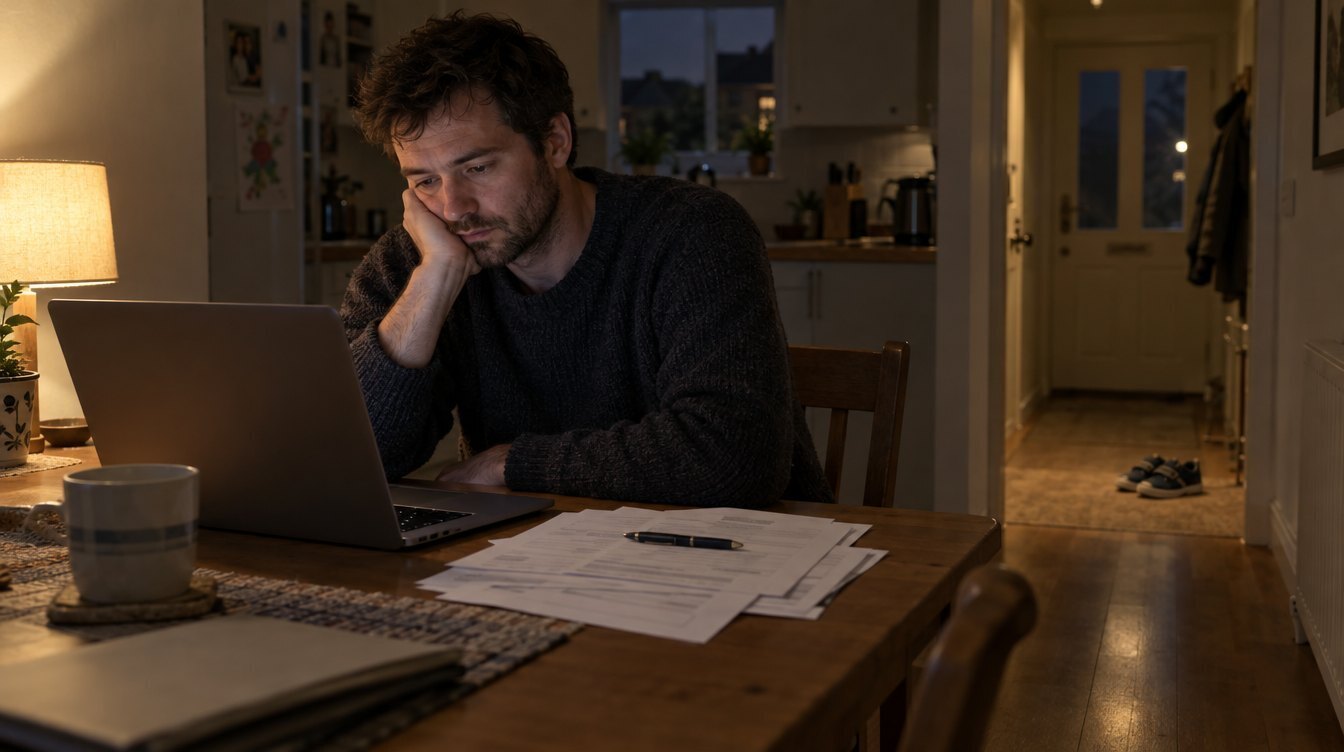
Sam rang me on a Sunday night. His daughter's school shoes were still by his front door from the weekend before, when everything had been fine. Then a message: "She won't be coming this week." Then nothing. Two weeks of nothing.
Sam is a composite, built from many parents I have sat beside, with every detail changed. But if you are reading this at midnight with a knot in your stomach, you will recognise him. He wanted to drive round there. He wanted to post about it. He wanted to tell the school everything. I said what I say to every parent in that moment: stop. Listen, listen. We are going to do this properly, and properly is faster in the end.
Here is the path, in order, with what each step really involves.
What to do in the first week
- Do not turn up uninvited at the other parent's home or at school to force a handover. It can escalate quickly and it will be raised later.
- Start a simple log. Dates you were due to see your child, what happened, every message sent and received. Facts only, no commentary.
- Send one calm written proposal. Short, polite, about your child. For example: "I'd like to keep seeing her every other weekend and one evening in the week, as before. If something's worrying you, I'm happy to talk or go to mediation."
- Keep your child out of it. No messages through them, no questions about the other home, no adult worries on young shoulders.
- Stay off social media about the situation, completely.
- Keep paying child maintenance. In England and Wales, money and time with your child are separate issues. Stopping one to pressure the other always looks bad.
If there are safety concerns
Sometimes a parent stops contact because they are frightened, for themselves or the child. If there are allegations of domestic abuse or harm, the court will take them seriously and may need to decide what happened before deciding arrangements. Do not try to argue them out on WhatsApp. Get advice, and if you have been accused, respond only through the proper process.
If you believe your child is at immediate risk, or may be taken abroad without your agreement, call 999. Urgent applications to the court are possible in genuine emergencies.
Mediation and the MIAM
Before you apply to court for a child arrangements order, you will usually need to attend a Mediation Information and Assessment Meeting, known as a MIAM. It is a short meeting with an accredited family mediator who explains mediation and other ways of resolving things outside court, and checks whether it is suitable for your family.
There are exemptions, including evidence of domestic abuse, urgency, and certain child protection concerns. If you claim an exemption, you say so on the application form and the court can check it.
The courts now expect parents to seriously consider resolving things outside court, and a judge can pause a case to encourage it where that is appropriate. Mediation works for many families, and when it works, it is quicker and calmer. Ask the mediator whether any government funding scheme is running when you contact them.
The mediator signs your C100 form or gives you a certificate to confirm you attended, or that mediation was not suitable or the other parent did not engage.
Applying to court: the C100
If mediation does not resolve things, you apply on form C100. You can apply online or on paper through GOV.UK. Most parents ask for a child arrangements order, which sets out who a child lives with, spends time with, or otherwise has contact with. There are also prohibited steps orders and specific issue orders for particular decisions.
A few practical points I see parents trip up on:
- There is a court fee. Check the current amount on GOV.UK when you apply, and check whether you qualify for Help with Fees.
- Keep it child focused. The form asks what you want and why. Write about your child's needs and your relationship with them, not your ex's failings.
- Be specific. "Every other weekend from Friday after school to Sunday 5pm, and Wednesday tea time" is better than "regular contact".
- Safety concerns go on form C1A. If either parent raises abuse or harm, this supplementary form sets the concerns out.
A word on language: "custody" and "access" are not used in England and Wales any more. They were replaced by child arrangements orders in 2014. If you search for "custody", that is what you are looking for.
What Cafcass does
Once your application is issued, Cafcass (in Wales, Cafcass Cymru) carries out safeguarding checks before the first hearing. Usually that means police and local authority checks, and a telephone call with each parent. Its job is to advise the court about your child's welfare, not to take sides.
Prepare for that call like it matters, because it does. Be honest. Be calm. Speak about your child: their routine, their school, what they love doing with you, how you will support their relationship with the other parent. Do not use it to list everything the other parent has done wrong.
In some areas of England and all of Wales, cases now run through the Child Focused Courts model, previously called Pathfinder. There, information is gathered earlier, a Child Impact Report is prepared, and the court tries to hear the child's voice sooner. The judiciary announced in March 2026 that the model is live in ten areas, including all of Wales, Birmingham and the West Midlands, and Hampshire and the Isle of Wight, with more to follow.
Sam's safeguarding call
Sam's first draft of what he wanted to say to Cafcass was three pages about his ex. We cut it to five points about his daughter: her bedtime routine at his, her swimming lessons on Saturdays, her best friend who lives on his street, how he would make sure she could ring her mum whenever she wanted, and that he would start with daytime visits if that helped everyone feel safe.
He practised saying it out loud. On the call he was nervous, but he stayed on his daughter. That steadiness carried through to the first hearing.
The first hearing (FHDRA)
The first hearing is called the First Hearing Dispute Resolution Appointment, or FHDRA. It is often short. A judge or magistrates will have the Cafcass safeguarding letter and will look at:
- whether there are safety issues that need to be dealt with first
- whether arrangements can be agreed, in full or in part, on the day
- whether interim arrangements should be put in place while the case continues
- what evidence or reports are needed, such as statements or a Section 7 welfare report
Many cases settle at or soon after this hearing. Bring a short written proposal. Be ready to agree something sensible, even if it is a stepping stone rather than everything you want. A gradual plan you can build on beats a perfect plan nobody signs up to.
If it doesn't settle: reports and the final hearing
If things are not agreed, the court may order a Section 7 report, in which a Cafcass officer or social worker looks more deeply at your child's welfare and may speak to your child. There may be a Dispute Resolution Appointment to try again to agree things once the report is in, and then a final hearing where the court decides.
When deciding, the court treats your child's welfare as its paramount consideration and works through a welfare checklist, including your child's wishes and feelings (in the light of their age and understanding), their needs, and the effect of any change. The law presumes that the involvement of each parent in a child's life will further the child's welfare, unless there is evidence that it would put the child at risk.
How long does it take? In the official figures for January to March 2026, private law children cases took an average of 35 weeks from start to finish, and just over half finished within 26 weeks. Every case is different.
Mistakes that cost parents time with their children
- Turning up unannounced to force contact.
- Long, angry messages to the other parent. Short and polite, always.
- Posting about the case online.
- Asking your child to take sides, carry messages or keep secrets.
- Statements that are all about the other parent and barely mention the child.
- Stopping child maintenance.
- Refusing every interim offer because it is not everything you want.
- Walking in unprepared, without a written proposal.
Parental responsibility: do you have it?
Parental responsibility is the legal rights and responsibilities a parent has for a child. Mothers have it automatically. Fathers have it if they were married to the mother when the child was born, or are named on the birth certificate for a birth registered after 1 December 2003 in England and Wales, or have obtained it through an agreement or court order. Having parental responsibility does not in itself decide where a child lives or how much time they spend with each parent. That is what a child arrangements order deals with.
Grandparents and other family members can also apply for time with a child, although they usually need the court's permission first.
Quick answers
Can my ex legally stop me seeing my child?
If there is no court order, there is nothing that automatically forces a handover, which is why many parents apply for a child arrangements order. If there is an order, both parents are expected to follow it, and a parent who breaches it without a reasonable excuse can face enforcement. If a parent stops contact because of genuine safety concerns, the court will look at those concerns carefully.
Do I have to go to mediation before applying to court?
Usually you must attend a MIAM, a short mediation information meeting, before applying for a child arrangements order. There are exemptions, such as evidence of domestic abuse or urgency. Attending the meeting does not force you to mediate if it is not suitable.
What form do I need to see my child?
Form C100, the application for a child arrangements order and other orders under the Children Act 1989. If there are concerns about abuse or harm, form C1A sets them out. You can apply online through GOV.UK.
What happens at a FHDRA?
The First Hearing Dispute Resolution Appointment looks at the Cafcass safeguarding letter, any safety issues, whether arrangements can be agreed, whether interim arrangements are needed, and what reports or statements are required next. Many cases agree something at or soon after it.
How long does a child arrangements case take?
It varies. Official figures for January to March 2026 show an average of 35 weeks from application to the end of the case, with just over half of cases finishing within 26 weeks.
Is it still called custody in the UK?
Not in England and Wales. Custody and access were replaced by child arrangements orders in 2014. These orders set out who a child lives with and spends time with.
Should I stop paying maintenance if I can't see my child?
No. Child maintenance and time with your child are separate issues in England and Wales. Stopping maintenance can harm your child and your credibility with the court.
Walk into court ready
Got a hearing coming? Let's get you prepared properly.
Work With Nabila: a full review of your case and a plan built backwards from your hearing date, a prep call before the hearing, and 6 months of membership: the McKenzie Friend Portal to keep every date, document and draft in one place, plus a live coaching session every month. One fixed fee of £450.
Work with Nabila Not ready yet? The £8 Court Ready Kit Information and support, not legal advice. If there are safety concerns, see Keeping You Safe below.- Apply for a court order about arrangements for your child, GOV.UK
- Form C100, GOV.UK
- Get help paying court and tribunal fees, GOV.UK
- Cafcass: help for parents and carers
- Judges welcome roll-out of Child Focused Courts, March 2026, Courts and Tribunals Judiciary
- Family Court Statistics Quarterly: January to March 2026, Ministry of Justice
- Children Act 1989, section 1 (welfare), legislation.gov.uk
- Parental rights and responsibilities, GOV.UK